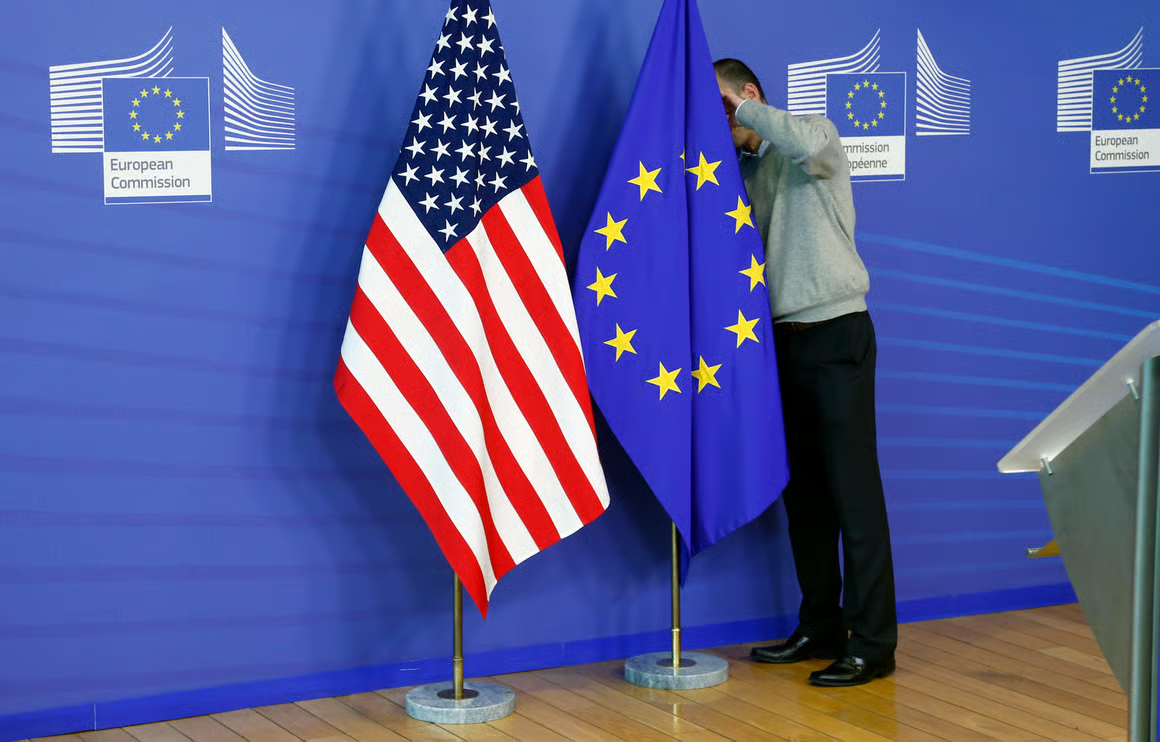
Trump Europe trade tensions escalated in early 2026 after President Donald Trump threatened to impose steep tariffs on European imports.
What made this episode unusual was not just the scale of the proposed tariffs—but the reason behind them.
Rather than focusing on traditional trade disputes such as steel, automobiles, or agricultural subsidies, the tariff threats were tied to controversy surrounding Greenland, its sovereignty, and broader Arctic geopolitical strategy.
This move reignited fears of a renewed U.S.–Europe trade war, raising concerns about global markets, supply chains, and the long-term health of transatlantic alliances.
📈 What Sparked the Latest Trade Tensions?

In January, President Trump announced plans to impose import tariffs on goods from eight European countries, including:
- Denmark
- Sweden
- France
- Germany
- United Kingdom
- Netherlands
- Finland
- Norway
The proposal outlined:
- 10% tariffs starting February 1
- Escalation to 25% by June, unless Greenland’s future status aligned with U.S. strategic objectives
The U.S. administration framed the move as a matter of national security and Arctic defense, arguing that control and influence in the Arctic are becoming vital as climate change opens new shipping lanes and resource access.
European leaders, however, saw it very differently.
🌍 Europe’s Response: Unity Over Pressure

European governments and institutions reacted swiftly and firmly.
Key responses included:
- Denmark reaffirmed that Greenland’s sovereignty is not for sale
- Officials from the European Union labeled the tariff threats a strategic mistake
- European commissioners began preparing measures to strengthen Arctic security, economic visibility, and trade resilience
Several European states also discussed potential retaliatory measures under EU trade enforcement tools, signaling that any imposed tariffs could trigger a broader response. European officials warned that escalating tariff disputes could weaken long-standing trade frameworks supported by the European Union.
European leaders emphasized that long-standing alliances and sovereignty cannot be negotiated through economic pressure.
💼 Economic Impact & Market Reactions
Even before any tariffs were enacted, markets reacted to the threat alone.
Immediate Market Effects
- European stock indices declined amid uncertainty
- Investors shifted toward safe-haven assets such as gold and silver
- Currency markets showed increased volatility
Sector-Specific Risks
Analysts warned that:
- Swedish exports to the U.S. could fall by up to 28% if tariffs take effect
- Machinery, automotive, and electronics sectors would be hit hardest
- Smaller exporters face disproportionate risks due to thin margins
This uncertainty was particularly striking because the EU and U.S. had negotiated a trade framework agreement in 2025 aimed at easing tariffs on several categories—an agreement now under strain.
📊 Why Trump Europe Trade Tensions Escalated
Most trade disputes revolve around goods, subsidies, or market access. This one is different.
President Trump has directly linked trade pressure to Greenland, an Arctic territory within the Kingdom of Denmark.
Why This Is Unusual
- It ties geopolitical strategy to trade policy
- It blurs the line between diplomacy and economic coercion
- It introduces Arctic security into commercial negotiations
From Washington’s perspective, Greenland is critical due to:
- Arctic military positioning
- Rare earth and critical mineral potential
- Monitoring Russian and Chinese Arctic activity
From Europe’s perspective, using tariffs to influence sovereignty sets a dangerous precedent.
🛡️ Risks to Transatlantic Cooperation
Experts warn that this dispute could have spillover effects beyond trade.
Countries involved are key members of NATO, and sustained tension risks:
- Undermining alliance trust
- Weakening coordinated Arctic security planning
- Complicating joint responses to global crises
European leaders have stressed the importance of honoring existing agreements and preserving institutional cooperation despite disagreements.
📉 Could This Become a Full-Blown Trade War?

At present, the situation remains in the escalation phase, not a full trade war. However, several factors increase risk:
- The unusual trigger (Greenland, not trade imbalance)
- Domestic political pressures on both sides
- The possibility of EU retaliation
European officials have discussed counter-tariffs on U.S. products such as:
- Aircraft components
- Agricultural goods
- Alcoholic beverages
If enacted, this could widen the dispute and disrupt global supply chains, something economists caution against during a period of already fragile global growth.
🌐 What This Means for the Global Economy
Higher tariffs almost always result in higher costs for businesses and consumers.
Likely Global Effects
- European manufacturers may lose competitiveness in U.S. markets
- American consumers could face higher prices
- Investment decisions may be delayed due to uncertainty
- Long-term trade frameworks, including WTO mechanisms, may come under stress
Transatlantic trade disputes historically create outsized global ripple effects, given the size of both economies.
🧠 Why This Matters Beyond Tariffs
This episode highlights a broader global trend:
Geopolitics and economic policy are increasingly intertwined.
Trade is no longer just about efficiency—it is about:
- Strategic positioning
- Resource security
- Influence over future technologies and routes
Greenland has become a symbol of this shift.
📍 Conclusion: Competition, Not Collapse—Yet
The emerging U.S.–Europe trade tensions do not yet constitute a full trade war. However, the linking of tariffs to Greenland’s strategic future has introduced a new and controversial dimension into transatlantic relations.
There is:
- No military conflict
- No immediate tariff implementation
- But clear geopolitical competition
As negotiations continue, global markets and governments will watch closely to see whether diplomacy prevails—or whether this dispute escalates into a broader economic confrontation.
In an era of rising global tension, how the U.S. and Europe manage this moment may shape the future of alliances, trade, and Arctic strategy for years to come.