
Introduction
The confrontation between United States, Israel, and Iran has become one of the most significant geopolitical crises of the modern era. What began decades ago as political rivalry, ideological opposition, and strategic competition has gradually evolved into direct military confrontation and regional instability.
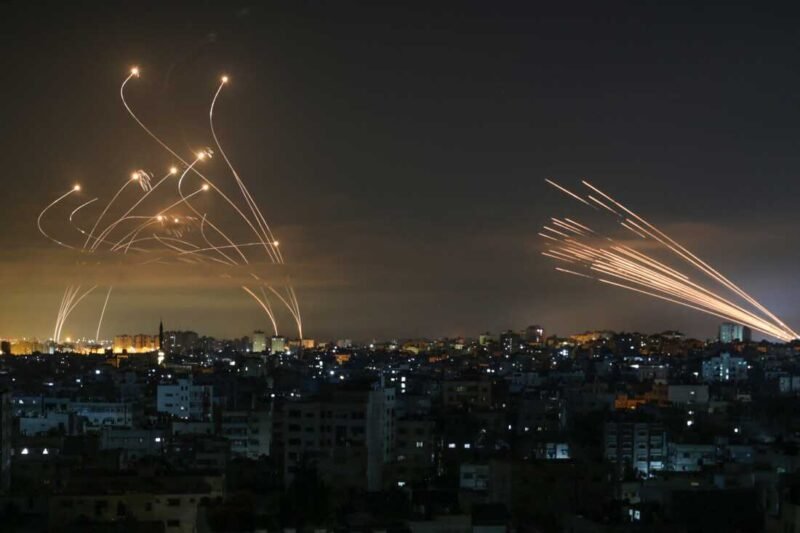
By 2026, tensions between these powers had escalated into a broader conflict involving airstrikes, missile attacks, cyber operations, and proxy warfare across multiple regions of the Middle East. The situation has raised global concerns about energy security, international trade routes, nuclear proliferation, and the stability of international alliances. The US Israel Iran War 2026 has become one of the most significant geopolitical conflicts shaping the security dynamics of the Middle East.
The Middle East has long been a center of geopolitical competition because of its strategic location and vast energy resources. When tensions rise between major powers in this region, the consequences often extend far beyond regional borders.
Understanding the roots, developments, and implications of the US–Israel vs Iran conflict is essential for analyzing modern international politics. This article explores the historical background of the rivalry, the key events that led to the 2026 escalation, the military strategies employed by the parties involved, and the potential global consequences of the conflict. To understand the background, read Iran vs Israel: The Real Conflict Explained
Historical Background of the Rivalry

The Iran–United States Conflict
Relations between the United States and Iran have been tense for decades, largely shaped by historical events that transformed the political landscape of the Middle East.
One of the earliest turning points occurred in 1953, when the Iranian government led by Prime Minister Mohammad Mossadegh was overthrown in a coup supported by the United States and the United Kingdom. The event created deep political resentment in Iran and influenced the future direction of Iranian politics.
Another critical moment came during the Iranian Revolution of 1979, when the monarchy of Shah Mohammad Reza Pahlavi collapsed and the country was transformed into an Islamic Republic. Following the revolution, diplomatic relations between Iran and the United States deteriorated dramatically.
The situation worsened after Iranian students seized the United States Embassy in Tehran, leading to the Iran hostage crisis, in which American diplomats were held hostage for more than a year.
Since then, the two countries have remained adversaries, frequently clashing over issues such as nuclear development, economic sanctions, and regional influence. According to analysis by the Council on Foreign Relations, tensions between Iran, Israel, and the United States have been escalating due to concerns about regional security and nuclear development.
Iran–Israel Hostility
While tensions between Iran and the United States were largely political and strategic, the rivalry between Iran and Israel developed from ideological and security concerns.
Iran’s leadership has consistently criticized Israel’s existence and has supported groups that oppose Israeli policies in the region. Israel, on the other hand, views Iran’s military capabilities and nuclear ambitions as a major threat to its national security.
Over the past two decades, the two countries have engaged in a covert struggle often described as a shadow war. This confrontation involved cyberattacks, intelligence operations, sabotage of nuclear facilities, and targeted assassinations.
Although these confrontations rarely escalated into direct warfare initially, they laid the groundwork for the larger confrontation that eventually emerged in the mid-2020s.
The Role of Iran’s Nuclear Program

One of the central issues in the confrontation between Iran and its rivals is Iran’s nuclear program.
Iran has consistently stated that its nuclear program is intended for peaceful purposes such as energy production and scientific research. However, many Western governments and security analysts believe the program could potentially be used to develop nuclear weapons.
This concern led to years of international negotiations, sanctions, and diplomatic agreements.
In 2015, Iran signed the Joint Comprehensive Plan of Action (JCPOA) with several global powers. The agreement imposed restrictions on Iran’s nuclear activities in exchange for sanctions relief.
However, the agreement later faced challenges as political leadership changed and tensions increased. As diplomatic negotiations stalled, concerns about Iran’s nuclear development resurfaced, contributing to rising geopolitical tensions.
Israel, in particular, has consistently argued that preventing Iran from developing nuclear weapons is essential for regional security. The risk of escalation is discussed in Nuclear War Explained
The 2025 Escalation

In 2025, the long-standing tensions between Israel and Iran escalated dramatically.
Israel launched a series of airstrikes targeting Iranian military and nuclear infrastructure. These operations were aimed at disrupting facilities believed to be connected to Iran’s nuclear development.
Iran responded with missile and drone attacks against Israeli territory, marking one of the most direct military exchanges between the two nations.
The United States later became involved by supporting Israeli defense operations and conducting strikes against certain Iranian facilities.
During this period, several developments intensified the conflict:
- Missile attacks targeting strategic locations
- Drone operations and aerial defense engagements
- Cyber operations targeting infrastructure
- Heightened military deployments across the region
The confrontation lasted for several days and resulted in significant military tension across the Middle East.
Although diplomatic intervention eventually produced a temporary ceasefire, the conflict left the region on edge and set the stage for future escalation.
Strategic Geography of the Conflict


Geography plays a crucial role in understanding the importance of the conflict.
The Middle East contains several strategic maritime chokepoints that are essential for global trade and energy transportation.
One of the most important routes is the Strait of Hormuz, a narrow waterway connecting the Persian Gulf to the Arabian Sea.
A large portion of the world’s oil exports passes through this route. Any disruption to shipping in this region can have immediate effects on global energy prices and international trade.
Another critical route is the Bab el-Mandeb Strait, which connects the Red Sea to the Gulf of Aden and ultimately to the Suez Canal.
These waterways are essential for international shipping and global economic stability.
Because of their importance, naval forces from several countries regularly patrol these routes to ensure safe passage for commercial vessels.
Proxy Warfare in the Middle East

One of the defining characteristics of the US–Israel vs Iran conflict is the widespread use of proxy forces.
Rather than engaging directly in large-scale conventional warfare, countries often support allied groups that operate within other nations.
Iran has developed relationships with several regional organizations that extend its strategic influence across the Middle East. These groups operate in areas such as Lebanon, Iraq, Syria, and Yemen. The US Israel Iran War 2026 represents one of the most significant geopolitical crises in the Middle East.
Through these alliances, Iran can apply pressure on its adversaries without exposing its own territory to immediate retaliation.
Similarly, the United States and Israel maintain strategic partnerships with various regional governments and security organizations.
These alliances create a complex network of military relationships that shape the dynamics of the conflict.
Proxy warfare also makes conflicts harder to control, as events in one region can quickly trigger reactions in another.
Military Capabilities of the Major Players
Iran’s Military Strategy
Iran has developed a military strategy focused on asymmetric warfare. Rather than relying solely on conventional forces, Iran emphasizes missile systems, drones, naval tactics, and proxy alliances.
Iran’s missile arsenal is considered one of the largest in the Middle East. These systems are designed to deter potential adversaries by threatening strategic targets across the region.
Iran has also invested heavily in drone technology, which allows it to conduct surveillance and precision strikes with relatively low cost.
Israel’s Defense Doctrine
Israel’s military doctrine is based on rapid response, technological superiority, and strong intelligence capabilities.
The Israel Defense Forces (IDF) operates one of the most advanced air forces in the world and maintains sophisticated missile defense systems designed to intercept incoming rockets and ballistic missiles.
Israel’s strategy emphasizes pre-emptive action and maintaining a technological edge over potential adversaries.
The United States Military Presence
The United States maintains a significant military presence across the Middle East.
Through alliances with regional partners and the deployment of naval and air forces, the United States seeks to maintain stability and protect international shipping routes.
American military bases in the region provide logistical support and rapid deployment capability during crises.
The presence of US forces also acts as a deterrent against potential escalation by regional actors.
Economic Consequences of the Conflict
The economic implications of the conflict are substantial.
Energy markets are particularly sensitive to geopolitical instability in the Middle East. Because the region produces a large share of the world’s oil, any disruption can lead to price volatility.
Rising oil prices can increase transportation costs, influence inflation, and affect economic growth across multiple countries.
Financial markets also respond quickly to geopolitical crises, as investors adjust their strategies based on perceived risks.
In addition, increased defense spending by many countries can shift government budgets and influence economic priorities.
Global Diplomatic Reactions
The conflict has triggered a wide range of diplomatic responses.
Some countries have expressed strong support for Israel’s security concerns, while others have emphasized the importance of diplomatic negotiations and conflict resolution.
International organizations have called for restraint and encouraged dialogue between the parties involved.
Diplomatic mediation efforts aim to reduce tensions and prevent further escalation, but progress has been slow due to deep political mistrust.
Risks of a Wider Regional War
One of the biggest concerns among international analysts is the possibility that the conflict could expand beyond its current scope.
Several factors contribute to this risk:
- The involvement of proxy forces across multiple countries
- Strategic alliances among regional powers
- The presence of advanced weapons systems
If additional countries become directly involved, the conflict could escalate into a broader regional war with significant humanitarian and economic consequences.
Preventing such escalation remains a key priority for global diplomacy.
Timeline of the US Israel Iran War 2026
The US Israel Iran War 2026 represents one of the most significant geopolitical crises in the Middle East. Predicting the future trajectory of the US–Israel vs Iran conflict is difficult. The US Israel Iran War 2026 will likely influence regional security and global energy markets for years.
Several possible scenarios exist:
- Continued limited confrontation involving proxy forces and periodic military exchanges
- Diplomatic agreements that reduce tensions and limit nuclear development
- Escalation into a larger regional war involving multiple countries
The outcome will depend on diplomatic negotiations, strategic decisions by political leaders, and developments within the broader international system.
Conclusion
The confrontation between the United States, Israel, and Iran represents one of the most complex geopolitical challenges of the modern era.
Decades of rivalry, ideological conflict, and strategic competition have gradually escalated into a dangerous regional crisis.
The conflict has implications not only for the Middle East but for global security, energy markets, and international diplomacy.
While military tensions remain high, diplomatic solutions remain the most effective path toward long-term stability.
The coming years will likely determine whether the region moves toward greater conflict or renewed cooperation.

Mohit Tejwani is a geopolitics writer and researcher focused on global conflicts, international relations, and military strategy. He analyzes ongoing global tensions and provides simplified insights into complex world events.

One Comment