Introduction
Pakistan Afghanistan Border Conflict has become one of the most significant geopolitical tensions in South Asia. The Pakistan Afghanistan Border Conflict has intensified in recent years due to growing security concerns along the Durand Line. The long and disputed border between Pakistan and Afghanistan, known as the Durand Line, has frequently witnessed security incidents, military clashes, and diplomatic disagreements. In recent years, the Pakistan Afghanistan border conflict has escalated due to militant activity, border fencing disputes, and growing regional security concerns.
The border separating Pakistan and Afghanistan—commonly known as the Durand Line—has remained a source of political tension for more than a century. Periodic clashes, accusations of cross-border militant activity, and disagreements about border control policies have created an environment where military escalation can occur quickly.
In recent years, the situation along the border has intensified due to evolving security dynamics in Afghanistan, militant activity in border regions, and growing strategic concerns for Pakistan. Border skirmishes, airstrikes, and security operations have raised fears that tensions could escalate into a wider regional crisis.
This article provides a comprehensive analysis of the Pakistan–Afghanistan border conflict, examining its historical roots, the strategic importance of the border region, recent military developments, and the potential geopolitical consequences for South Asia and beyond.
Historical Background of the Pakistan–Afghanistan Border
Origins of the Durand Line
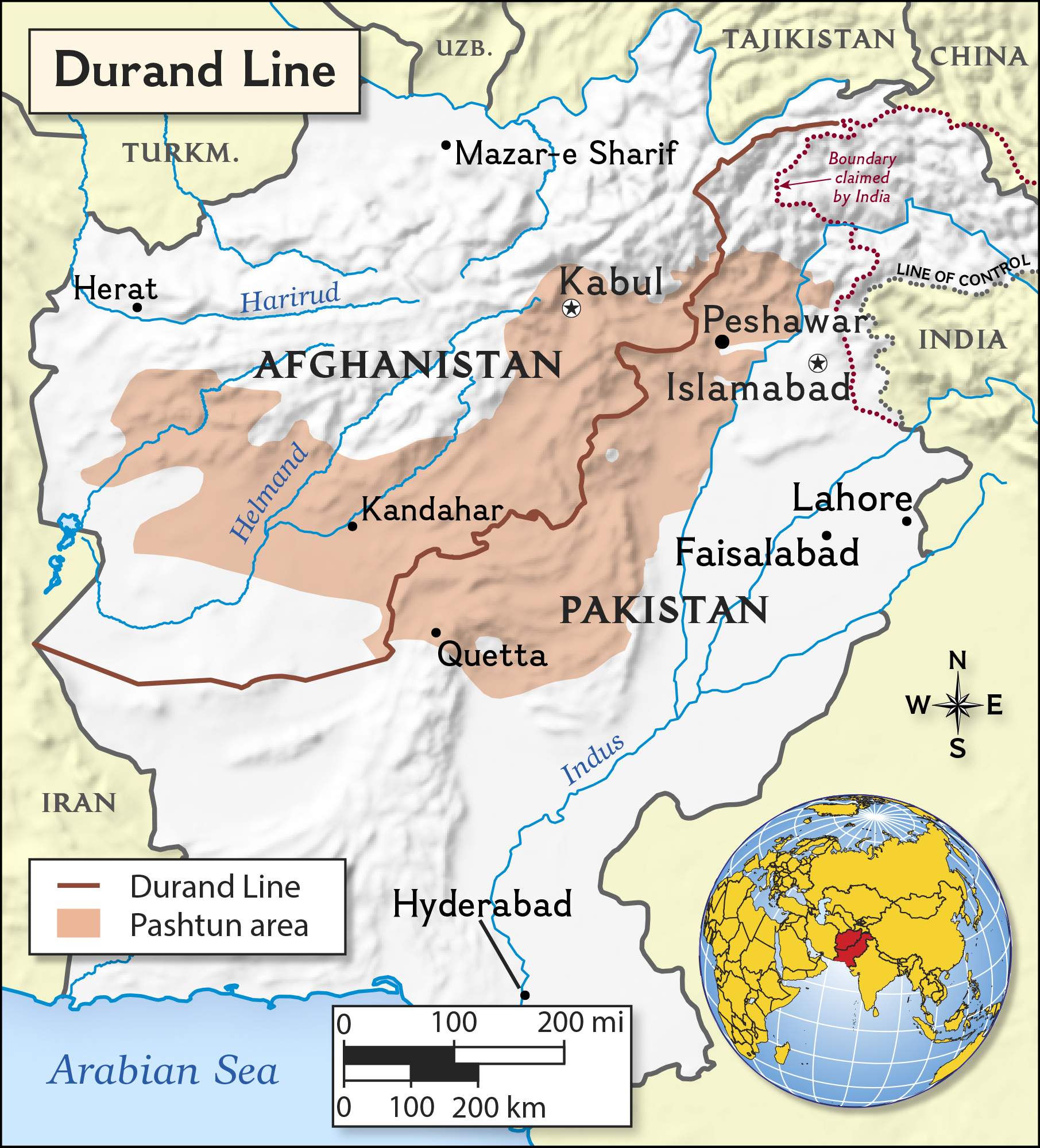
The origins of the border dispute date back to 1893, when British colonial authorities negotiated an agreement with Afghan leaders to define the boundary between Afghanistan and British India.
This boundary became known as the Durand Line, named after Sir Mortimer Durand, a British diplomat who negotiated the agreement.
The border was designed primarily as a strategic buffer zone between Afghanistan and British India. However, the agreement divided several tribal regions inhabited by Pashtun communities, leaving families and tribes separated across the border.
Analysts believe the Pakistan Afghanistan Border Conflict could influence regional stability across South Asia. When Pakistan became independent in 1947, it inherited the Durand Line as its international boundary with Afghanistan. Pakistan recognizes the Durand Line as the official border, but successive Afghan governments have historically challenged its legitimacy. Understanding the history of the Pakistan Afghanistan Border Conflict is essential for analyzing modern geopolitics in the region.
The dispute over the border has remained one of the most significant issues shaping relations between the two countries.
Ethnic and Cultural Dimensions
The border region is home to a large population of Pashtun tribes that share language, culture, and family connections across both countries.
Because of these cross-border ties, enforcing strict border controls has often been difficult.
For decades, people living in the region have moved across the border for trade, family visits, and seasonal migration. These movements have created economic and social connections that complicate political attempts to strictly control the border.
At the same time, the rugged mountainous terrain of the region makes it difficult for governments to monitor and secure every crossing point.
These geographic and cultural factors have contributed to the persistent instability along the Pakistan–Afghanistan border.
Strategic Importance of the Border Region
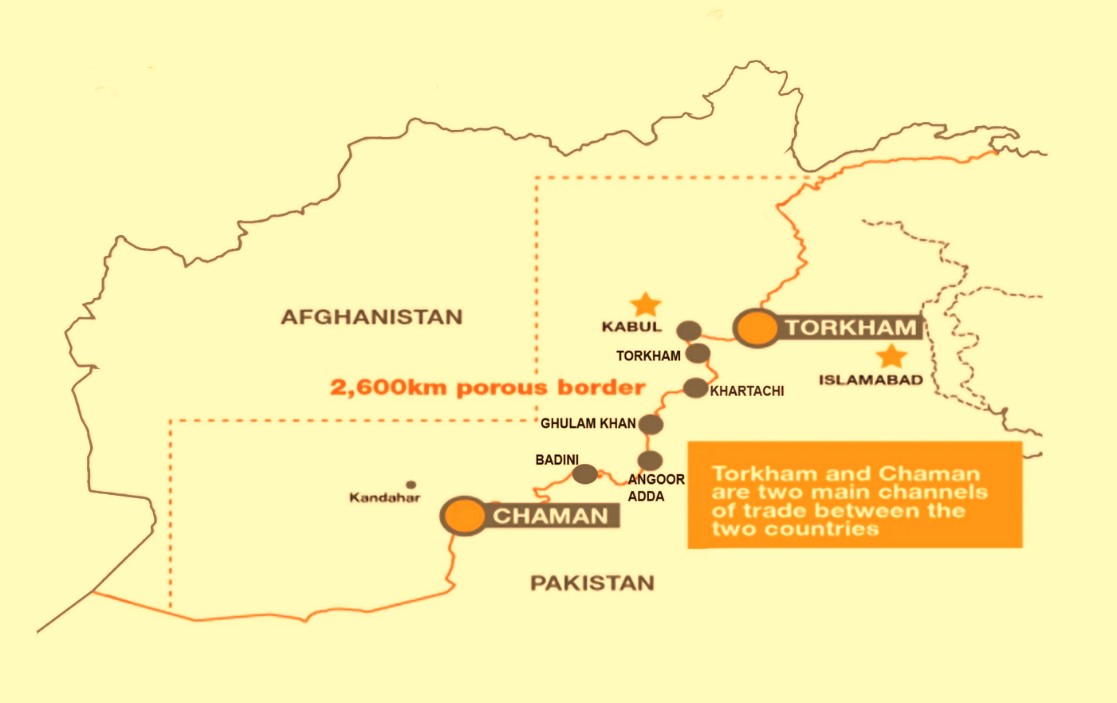
The Pakistan–Afghanistan border stretches across some of the most rugged terrain in South Asia. The region includes mountainous areas, narrow valleys, and remote villages that make security operations extremely challenging.
Several key crossing points play a vital role in regional trade and connectivity.
One of the most important crossings is the Torkham Border Crossing, which connects Pakistan’s Khyber Pakhtunkhwa province with Afghanistan’s Nangarhar province.
Another major crossing is Spin Boldak–Chaman Crossing, located in southern Afghanistan and Pakistan’s Balochistan region.
These crossings serve as critical economic lifelines for trade between the two countries. Thousands of trucks transport goods such as agricultural products, construction materials, and consumer goods through these routes every year.
Any disruption along the border can therefore affect trade flows and local economies.
Security Concerns and Militancy

One of the most significant factors contributing to tensions along the Pakistan–Afghanistan border is the presence of militant groups operating in the region.
For many years, both countries have accused each other of allowing militant organizations to operate from their territory.
Pakistan has frequently expressed concerns about cross-border attacks carried out by militants operating from Afghan territory. Afghan authorities, on the other hand, have sometimes accused Pakistan of supporting certain groups that operate inside Afghanistan.
These accusations have created deep mistrust between the two governments.
Security forces from both countries regularly conduct patrols and operations along the border to prevent infiltration and militant activity.
However, the difficult terrain and the complex political environment make it difficult to completely eliminate security threats.
Construction of Border Fencing
In an effort to strengthen border control, Pakistan began constructing a large border fence along the Durand Line in recent years.
The project involves installing fences, surveillance systems, and security checkpoints across hundreds of kilometers of border terrain.
Pakistan argues that the fence is necessary to prevent cross-border militant infiltration and illegal smuggling.
However, Afghan authorities have sometimes opposed the project, arguing that the border itself remains disputed.
These disagreements have occasionally led to confrontations between border forces.
Despite these challenges, the border fencing project has continued as part of Pakistan’s broader strategy to improve security in the region.
Escalation of Border Clashes
In recent years, tensions along the border have periodically escalated into armed clashes between Pakistani and Afghan forces.
These clashes often occur when security forces from one side accuse the other of violating the border or supporting militant activity.
In some cases, artillery fire and airstrikes have been reported near border villages. According to research published by the International Crisis Group, instability along the border has increased regional security risks.
Such incidents typically lead to temporary closures of major border crossings, disrupting trade and travel between the two countries.
Civilian communities living near the border are often the most affected by these clashes.
Local residents may be forced to temporarily leave their homes when violence erupts in nearby areas.
These humanitarian concerns add another layer of complexity to the already fragile relationship between Pakistan and Afghanistan.
Regional and Global Implications
The Pakistan–Afghanistan border conflict does not exist in isolation. It has broader implications for regional stability and international security.
South Asia sits at the crossroads of several major geopolitical interests involving regional powers and global actors.
Infrastructure initiatives such as the China–Pakistan Economic Corridor aim to enhance connectivity and trade across the region.
Instability along the Pakistan–Afghanistan border could affect these projects and disrupt economic development efforts.
In addition, security concerns in Afghanistan have implications for neighboring countries in Central Asia and the broader international community.
For this reason, many governments and international organizations closely monitor developments along the border.
Economic Impact of Border Tensions
Trade between Pakistan and Afghanistan has long been an important component of the regional economy.
Pakistan is one of Afghanistan’s largest trading partners, providing access to ports and markets for Afghan goods.
The Afghanistan–Pakistan Transit Trade Agreement facilitates the movement of goods across the border.
However, when border tensions escalate, trade routes can be disrupted.
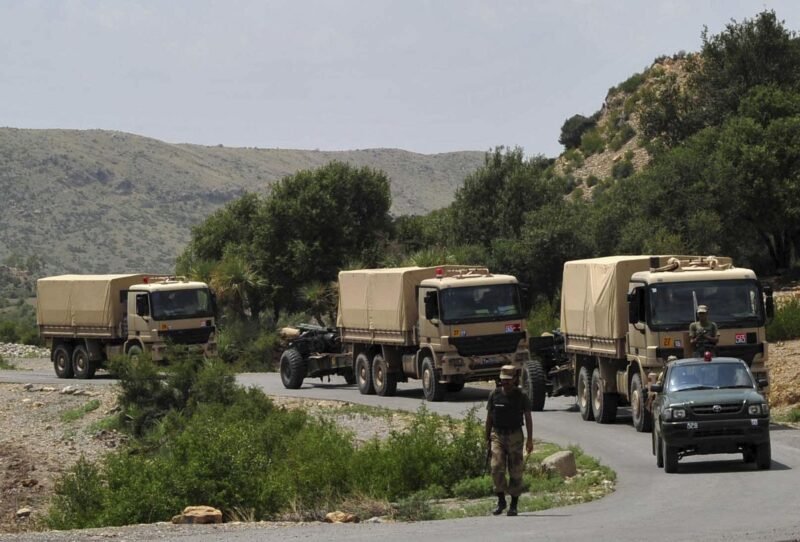
Truck convoys may face delays or closures at border crossings, affecting businesses and local communities that depend on cross-border commerce.
These economic disruptions can have ripple effects across the region.
Humanitarian Consequences
The communities living along the Pakistan–Afghanistan border are often among the most vulnerable populations in the region.
Many residents depend on agriculture, livestock, and small-scale trade for their livelihoods.
When clashes occur, these communities may experience displacement, damage to property, and interruptions to essential services such as healthcare and education.
Humanitarian organizations have sometimes been required to provide assistance to families affected by violence in border areas.
Addressing these humanitarian concerns is essential for building long-term peace and stability in the region.
Diplomatic Efforts to Reduce Tensions
Despite recurring tensions, both Pakistan and Afghanistan have periodically engaged in diplomatic dialogue aimed at improving relations.
High-level meetings between officials from the two countries have focused on issues such as border security, trade cooperation, and regional stability.
International organizations and regional partners have also encouraged dialogue between the two governments.
Confidence-building measures, joint border patrols, and improved communication channels have been proposed as ways to reduce misunderstandings and prevent accidental escalation.
While these initiatives have achieved limited success, they demonstrate that diplomacy remains an important tool for managing tensions.
Possible Future Scenarios
The future of the Pakistan–Afghanistan border conflict will depend on several key factors.
These include political developments within both countries, regional security dynamics, and the effectiveness of diplomatic engagement.
Several possible scenarios could emerge:
- Improved cooperation – increased diplomatic engagement and economic cooperation could reduce tensions along the border.
- Continued low-level clashes – periodic incidents may continue without escalating into full-scale conflict.
- Regional escalation – in the worst-case scenario, broader regional tensions could intensify the conflict.
Most analysts believe that sustained diplomatic engagement and economic cooperation offer the best path toward long-term stability.
Conclusion
The Pakistan–Afghanistan border conflict represents one of the most enduring geopolitical challenges in South Asia.
Rooted in historical disputes over the Durand Line and shaped by modern security concerns, the conflict continues to influence regional politics and international relations.
While tensions periodically escalate into military confrontations, the shared economic interests and cultural connections between the two countries highlight the importance of dialogue and cooperation.
Addressing the underlying causes of the conflict—including border management, militant activity, and economic development—will be essential for achieving long-term peace.
As the region continues to evolve, the relationship between Pakistan and Afghanistan will remain a key factor in determining the future stability of South Asia. Regional instability linked to Top 7 Global Conflict Zones

Mohit Tejwani is a geopolitics writer and researcher focused on global conflicts, international relations, and military strategy. He analyzes ongoing global tensions and provides simplified insights into complex world events.