
Introduction
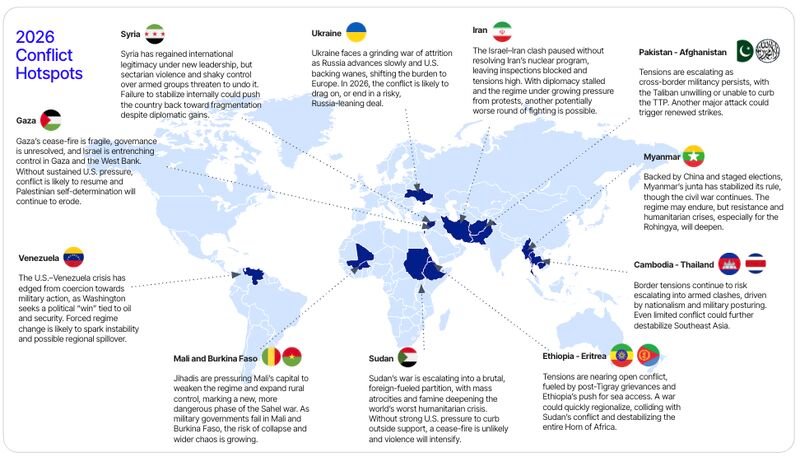
Global Conflict Zones 2026 are becoming one of the most important geopolitical topics shaping international security. Around the world, several regions are experiencing rising tensions, territorial disputes, and military rivalries that could influence global stability. From Eastern Europe and the Middle East to the Indo-Pacific and Africa, these conflict zones are closely monitored by governments, security analysts, and international organizations.
Many of these conflicts are rooted in historical disagreements over borders, political influence, or access to natural resources. The Global Conflict Zones 2026 highlight regions where geopolitical tensions could influence international security. Others are driven by modern issues such as technological competition, maritime control, and global supply chain security.
Although not every geopolitical dispute leads to war, several regions have become global conflict zones where tensions could escalate quickly. According to research published by the International Crisis Group, several geopolitical hotspots are likely to shape global security dynamics. These areas attract the attention of governments, international organizations, security analysts, and economic institutions because instability in these regions can influence global markets and international diplomacy.
Analysts closely monitor the Global Conflict Zones 2026 to understand emerging geopolitical risks. In this analysis, we explore seven major global conflict zones to watch in 2026, highlighting the historical background of each region, the strategic interests involved, and the potential implications for global stability.
1. Russia–Ukraine War

The ongoing war between **Russia and **Ukraine remains one of the most significant conflicts shaping international politics in Europe.
Historical Background
The roots of the conflict trace back to 2014 when tensions escalated following political changes in Ukraine and the annexation of Crimea by Russia. The crisis developed into a broader conflict involving military operations in eastern Ukraine, particularly in regions such as Donetsk and Luhansk.
Since then, the war has evolved into a prolonged confrontation involving both conventional and strategic military operations.
Strategic Importance
The Russia–Ukraine conflict has profound implications for European security. Several countries across Europe have reassessed their defense policies and increased cooperation with the **North Atlantic Treaty Organization.
Additionally, the conflict has accelerated discussions about energy independence in Europe due to historical reliance on Russian energy exports.
Global Consequences
Beyond Europe, the war has affected:
- global energy markets
- agricultural exports, particularly grain supplies
- international defense spending
- diplomatic relations between major powers
These factors make the Russia–Ukraine war one of the most closely monitored geopolitical conflicts in the world.
2. Israel–Iran Strategic Rivalry

The rivalry between **Israel and **Iran has long been one of the defining strategic tensions in the Middle East.
Roots of the Rivalry
The relationship between the two countries has been shaped by ideological differences, regional power competition, and security concerns related to military capabilities and nuclear technology.
Over time, this rivalry has influenced regional alliances and geopolitical strategies across the Middle East.
Regional Impact
The conflict affects multiple countries across the region and has implications for energy markets because the Middle East contains some of the world’s most important oil and gas reserves.
The involvement of global powers such as the **United States further increases the strategic importance of this rivalry.
Global Significance
Any escalation in tensions could influence international energy prices and maritime trade routes, making the region one of the most sensitive geopolitical areas in the world. One of the most important tensions in the Middle East is explained in detail in our analysis of US Israel Iran War 2026 Explained.
3. Pakistan Afghanistan Border Conflict

The Pakistan Afghanistan Border Conflict remains a persistent security challenge in South Asia.
The border between **Pakistan and **Afghanistan is known as the **Durand Line.
Historical Context
The Durand Line was established in the late nineteenth century during the colonial era. Since then, it has remained a sensitive issue in relations between the two countries.
Local communities living along the border share cultural and tribal connections that predate the modern boundary, making strict border control challenging.
Security Issues
Tensions along the border are often linked to security concerns such as cross-border militant activity and disagreements over border infrastructure projects.
These tensions occasionally lead to clashes between security forces from both countries.
Economic Importance
The border region also serves as an important economic corridor connecting South Asia and Central Asia.
Major crossings such as the **Torkham Border Crossing facilitate trade and movement between the two nations.
4. South China Sea Disputes

The **South China Sea remains one of the most contested maritime regions in the world. Several countries claim sovereignty over islands, reefs, and maritime zones within this strategically important sea.
Countries involved in territorial claims include:
- China
- Vietnam
- Philippines
- Malaysia
- Brunei
Strategic Importance of the Region
The South China Sea is crucial for global commerce. Approximately one-third of global maritime trade passes through this region every year. Major shipping lanes connecting East Asia, Europe, and the Middle East traverse these waters.
The seabed of the South China Sea is also believed to contain substantial natural resources, including oil and natural gas reserves. This potential wealth has intensified competition among claimant countries.
Island Construction and Military Presence
In recent years, artificial islands and infrastructure projects have been developed on several reefs and shoals across the region. These developments have included airstrips, ports, radar systems, and other facilities that strengthen military presence.
These activities have increased tensions between regional states and raised concerns about freedom of navigation and maritime security.
International Response
Several countries outside the region, including the United States, conduct maritime patrols and naval operations in the South China Sea to ensure open sea lanes and support international maritime law.
As a result, the South China Sea remains one of the most closely monitored maritime conflict zones globally.
5. Taiwan Strait Tensions
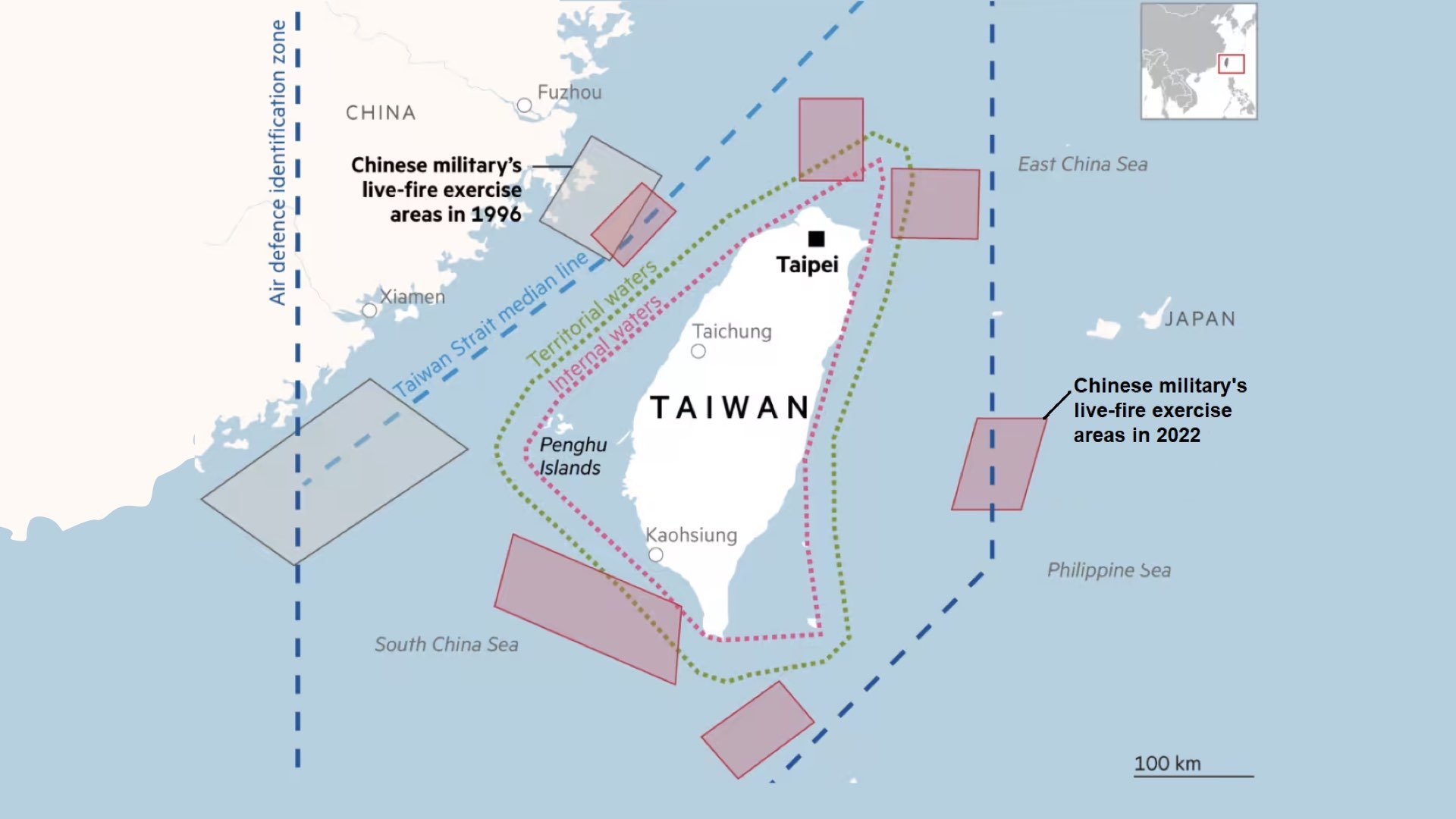
The **Taiwan Strait is a narrow body of water separating **China from **Taiwan. Despite its relatively small width, the strait holds immense geopolitical importance.
Historical Background
The political status of Taiwan has been a complex issue since the mid-20th century. China views Taiwan as part of its territory, while Taiwan operates as a self-governing entity with its own political system.
This political situation has led to decades of diplomatic and military tension across the strait.
Strategic Importance for Global Technology
Taiwan plays a central role in the global semiconductor industry. Companies located in Taiwan produce a significant portion of the world’s advanced microchips used in electronics, automobiles, and computing devices.
Because of this technological importance, stability in the Taiwan Strait has global economic implications.
Military Developments
The region has seen increasing military exercises, air patrols, and naval deployments in recent years. These activities often draw international attention because any major escalation could affect global trade routes and supply chains.
Many governments closely monitor developments in the Taiwan Strait due to the potential impact on regional stability and international security.
6. Red Sea Maritime Security Crisis

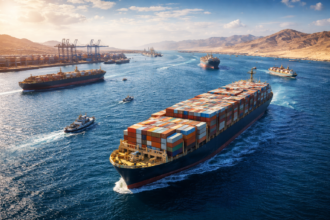
The **Red Sea is one of the most important maritime corridors in the global economy. This body of water connects the Mediterranean Sea to the Indian Ocean through the **Suez Canal and the **Bab el-Mandeb Strait.
Importance for Global Trade
Every year, thousands of cargo ships transport energy resources, consumer goods, and industrial materials through this route. The corridor significantly reduces travel time between Europe and Asia compared with routes around the southern tip of Africa.
Because of this efficiency, the Red Sea has become one of the busiest maritime corridors in the world.
Security Challenges
However, the strategic importance of this region also creates security challenges. Political instability in nearby regions and maritime incidents can disrupt shipping traffic and increase insurance costs for commercial vessels.
Naval forces from several countries conduct patrols in the Red Sea to ensure safe passage for international shipping.
Economic Consequences
Disruptions in the Red Sea can quickly influence global supply chains. Delays in shipping can increase transportation costs, which eventually affects international markets and consumer prices.
For this reason, maritime security in the Red Sea is considered a critical issue for global trade stability.
7. Sahel Region Instability
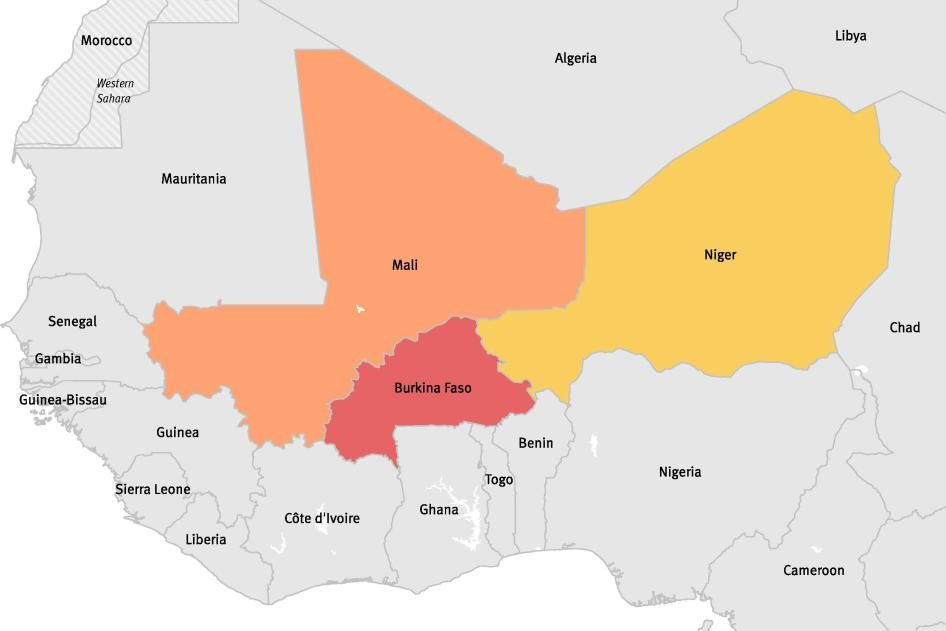
The **Sahel region stretches across Africa between the Sahara Desert and the savannah regions further south. This vast area includes several countries such as:
- Mali
- Niger
- Burkina Faso
Political and Security Challenges
Over the past decade, the Sahel has experienced significant political changes and security challenges. Some countries in the region have undergone political transitions, which have affected governance structures and regional cooperation.
These developments have created complex security dynamics across the region.
Economic and Environmental Pressures
The Sahel also faces environmental challenges such as desertification, water scarcity, and climate variability. These factors affect agriculture and economic development, contributing to social and economic pressures in rural communities.
International Involvement
Several international organizations and regional partnerships have launched initiatives aimed at improving security and economic stability in the Sahel.
These efforts focus on development programs, humanitarian assistance, and cooperation between regional governments.
Because of its strategic location between North Africa and Sub-Saharan Africa, stability in the Sahel is considered important for broader regional security.
Why Monitoring Global Conflict Zones Matters
Understanding geopolitical conflict zones helps policymakers, analysts, and international organizations anticipate potential risks.
Understanding the Global Conflict Zones 2026 helps governments prepare for potential diplomatic and security challenges. Regional conflicts can affect global markets, international trade routes, and diplomatic relations.
Studying these regions also helps identify opportunities for diplomatic engagement and conflict prevention.
Conclusion
The geopolitical landscape of 2026 is shaped by multiple regional tensions across Europe, the Middle East, South Asia, East Asia, and Africa.
While not all tensions escalate into full-scale conflicts, the strategic importance of these regions means they will continue to influence global security and international relations.
By monitoring developments in these key conflict zones, governments and international organizations can better understand emerging risks and work toward long-term stability.

Mohit Tejwani is a geopolitics writer and researcher focused on global conflicts, international relations, and military strategy. He analyzes ongoing global tensions and provides simplified insights into complex world events.


One Comment