📌 Introduction
Trump Board of Peace was launched in January 2026 by U.S. President Donald Trump as a proposed international initiative to oversee peacebuilding and post-conflict reconstruction, initially focused on Gaza but presented as a model for handling future global conflicts.
However, the plan has sparked controversy, drawing rejection or caution from key world leaders and alarm among diplomats who warn that the proposal could undermine established international institutions like the United Nations.
This article breaks down what the Board of Peace is, why many nations are hesitant to join it, examples of rejection (including France), and what this means for U.S. diplomacy and global governance.
🧠 What Is the “Board of Peace”?
The Board of Peace was announced by Trump in mid-January 2026 as an international governing body that would begin by overseeing reconstruction in Gaza and later expand to influence peacebuilding in other conflicts.
According to its draft charter:
- It would be chaired for life by Donald Trump.
- Member states could only serve three-year terms, unless they contribute $1 billion to the board, which would grant them permanent membership.
- The board’s mandate appeared broader than its original U.N. Security Council authorization, raising diplomatic concerns.
While the Security Council initially backed the idea as part of efforts to stabilize Gaza post-conflict, the expanded mission and structure of Trump’s version has been criticized for potentially weakening the role of the UN.
🌍 Early Invitations and Mixed Reactions
Trump is reported to have invited roughly 60 nations to join the Board of Peace, aiming to present the initiative at the World Economic Forum in Davos.
Countries Supporting or Showing Interest
Some nations have indicated support or tentative approval:
- United Arab Emirates (UAE) became one of the first countries to formally endorse the board and expressed willingness to contribute.
- Hungary and Argentina also expressed support or acceptance.
- Canada signaled agreement “in principle.”
However, many of the world’s major powers have been reluctant or have outright declined to participate.
❌ France and Other Rejections
🇫🇷 France Declines Invitation
French President Emmanuel Macron publicly declined the invitation to join the Board of Peace. French officials stated the board’s expanded mission raised serious questions about its scope and its potential impact on the U.N. Charter and multilateralism.
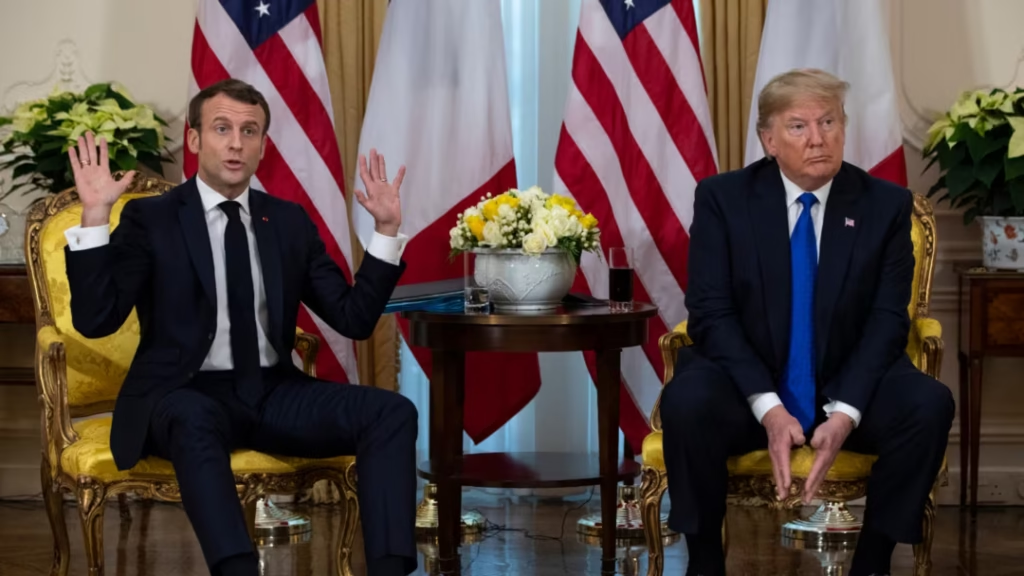
Macron’s office stressed that while the initiative was linked to Gaza, its broader ambitions suggested a mandate beyond what was originally authorized by the U.N., causing concern among European partners.
📉 Other Skeptical or Reluctant Responses
- Several European leaders reacted cautiously, with some governments expressing deep reservations or choosing not to comment publicly.
- Russia has been reported to be “studying every nuance” of the invitation before responding.
- Israel and several Israeli ministers also voiced objections to aspects of the plan, arguing local coordination was insufficient.
- Some nations fear that the structure and requirements of the board — especially the high cost of permanent membership — could turn it into a pay-to-play body.
🛑 Why So Much Pushback?
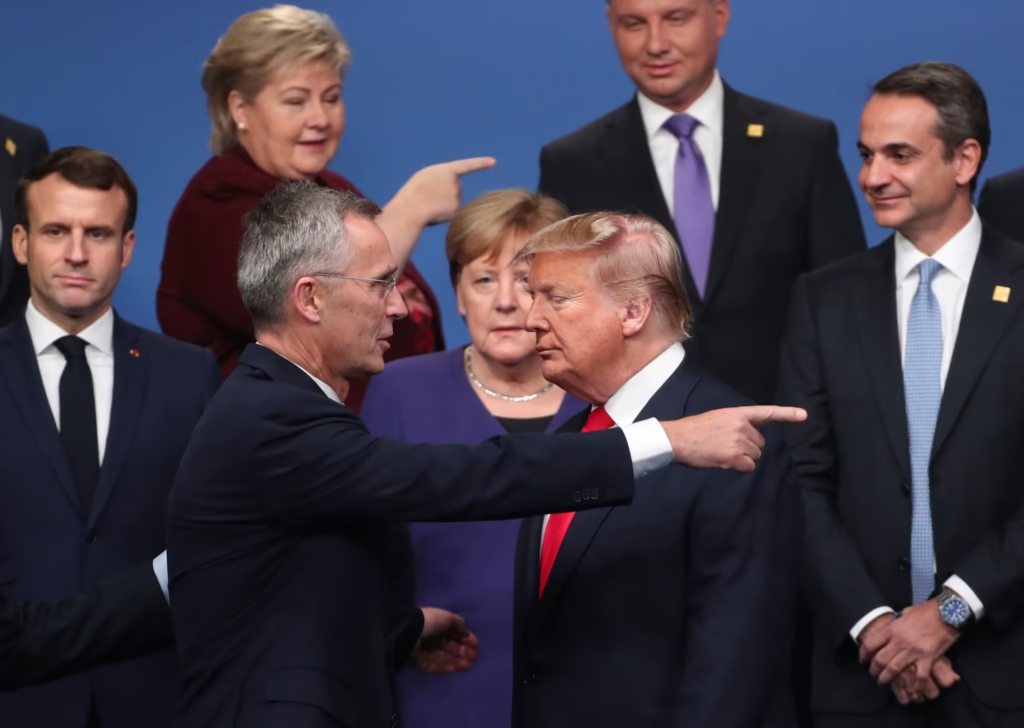
Why the Trump Board of Peace Faced Global Rejection. There are several key reasons behind global resistance to joining Trump’s board:
📌 1. Concerns About U.N. Authority
Many diplomats argue that the board’s expanded mission appears to supplant or sideline the role of the United Nations, which traditionally leads peacekeeping and post-conflict reconstruction efforts.
📌 2. Questions Over Legitimacy and Structure
Critics point out that:
- The board would be chaired for life by Trump.
- Permanent membership is tied to large financial contributions.
This has led some to label it a pay-to-play or vanity project rather than a genuine multilateral peace mechanism.
📌 3. Diplomatic and Legal Ambiguity
Many countries are waiting to see clarifications on legal frameworks, operational details, and how the board would interact with existing international institutions before committing.
Diplomats warned that the proposal could conflict with existing peace frameworks managed by the United Nations.
📊 Trump’s Response and Trade Pressure
In response to rejection, Trump reportedly used strong rhetoric and even threatened punitive measures — including threats of tariffs on French wine and champagne — to pressure Macron into reconsidering participation.
Experts say this kind of economic and diplomatic pressure may further alienate traditional allies and raise questions about U.S. foreign policy priorities.
🧠 What This Means for Global Governance
Trump’s Board of Peace initiative — despite its name — has highlighted fundamental debates about the future of international cooperation:
- Should new international bodies be created outside existing structures like the U.N.?
- Can a board with a permanent chair and fee-based membership command legitimacy?
- Will traditional allies view such initiatives as constructive or competitive with established multilateral institutions?
Many analysts believe that unless these questions are resolved in a transparent, inclusive, and rules-based manner, the initiative will struggle to gain broad support.
🧾 Conclusion
Donald Trump’s Board of Peace was launched with great fanfare but has encountered significant resistance from major world leaders. France’s public refusal to participate reflects deeper concerns about legitimacy, the role of the United Nations, and the nature of the board’s structure. While some nations have shown support, the hesitation and rejections from major powers suggest that the initiative may have limited impact on the broader international peace and security landscape.
The coming months — including discussions at forums like Davos — will likely determine whether this board becomes a genuine part of global peacebuilding or remains an idea struggling for acceptance. For a bigger picture, read Is World War 3 Really Possible?
Mohit Tejwani is a geopolitics writer and researcher focused on global conflicts, international relations, and military strategy. He analyzes ongoing global tensions and provides simplified insights into complex world events.