
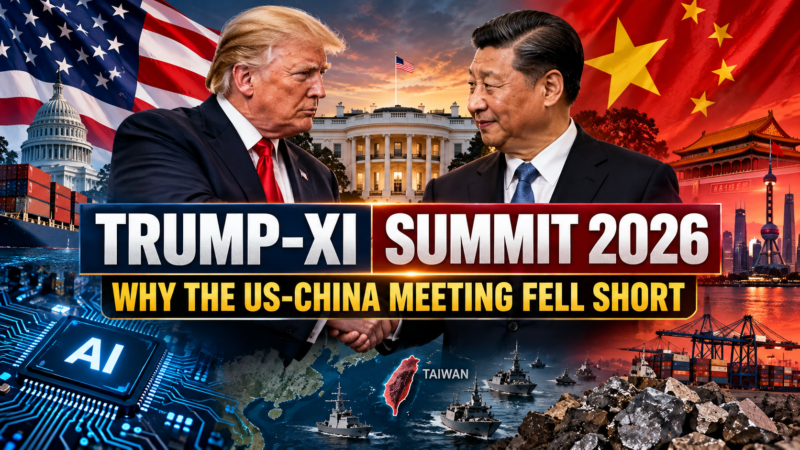
The Trump Xi Summit 2026 was one of the most closely watched diplomatic meetings of the year.
On September 24, 2026, US President Donald Trump hosted Chinese President Xi Jinping at the White House for a state visit that combined elaborate ceremony with discussions about some of the most difficult issues in the US-China relationship.
The meeting came at a particularly sensitive moment. The White House provided details about Xi Jinping’s official state visit and the ceremonial events surrounding his arrival.
Washington and Beijing remain strategic competitors, but both governments have also been trying to prevent competition from turning into uncontrolled confrontation.
The agenda included:
- trade
- tariffs
- artificial intelligence
- advanced technology
- critical minerals
- rare earths
- Taiwan
- Iran
- economic relations
- strategic stability
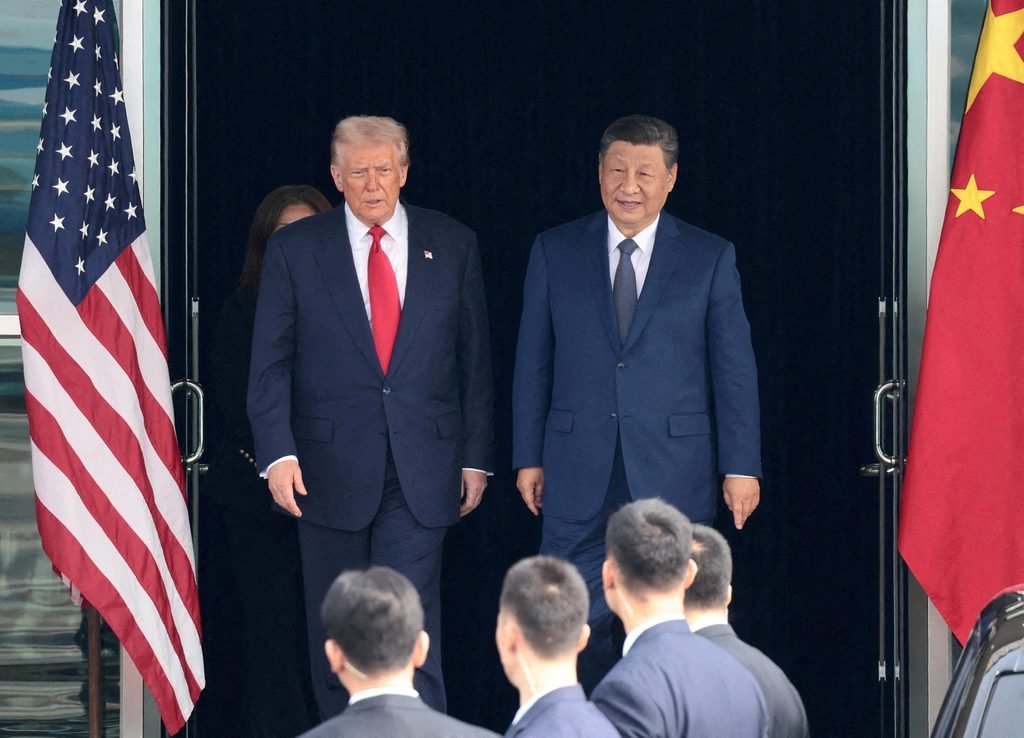
Xi’s visit was also symbolically significant. It was his first visit to Washington in more than a decade, according to the White House and multiple reports. The White House had planned an unusually elaborate state welcome involving military honors, a flyover and other ceremonial events.
The summit therefore carried expectations beyond the individual agreements that might emerge from the talks.
Could Trump and Xi stabilize the relationship?
Could they prevent another trade confrontation?
Could Washington and Beijing find common ground on artificial intelligence?
Could they reduce tensions over Taiwan?
Could China play a role in the conflict involving Iran?
And could the world’s two largest economies move from temporary trade arrangements toward something more durable?
The answer, based on the immediate results, was mixed.
The meeting produced continued dialogue and an extension of the existing trade truce, but reports found no major breakthrough on several of the most difficult disputes. Reuters reported that the trade truce was extended only until January 10, 2027, leaving major questions involving tariffs, Chinese purchases, rare-earth supplies and technology restrictions for future negotiations.
The Trump Xi Summit 2026 took place against the backdrop of major disagreements over trade, technology, artificial intelligence, Taiwan and critical minerals.
Why Was Xi Jinping Visiting Washington?
Xi Jinping’s September 2026 trip was an official state visit to the United States.
The White House announced that Trump would host Xi on September 24 and described the visit as a significant moment in US-China relations. The visit followed Trump’s own trip to China earlier in 2026.
The Chinese government presented the trip in similarly positive terms.
In remarks delivered at the White House, Xi said he had come to continue friendship, expand cooperation and promote the interests of both peoples. He also referred to the two governments’ earlier agreement to develop a “constructive China-US relationship of strategic stability.”
That language is important.
Neither side was approaching the summit as a traditional alliance meeting.
The United States and China remain competitors.
They disagree over:
- technology
- military power
- Taiwan
- trade
- industrial policy
- critical minerals
- global influence
- human rights
- economic security
- the future international order
Yet both governments have strong reasons to avoid an uncontrolled deterioration.
That created the fundamental purpose of the summit:
manage competition without allowing it to become an open confrontation.
A Relationship Built on Competition and Interdependence
The US and China have one of the world’s most complicated bilateral relationships.
They are competitors in strategic and military terms.
At the same time, their economies remain deeply connected.
American companies depend on Chinese manufacturing and supply chains in numerous sectors.
China depends heavily on international trade, including access to major markets and technology.
The two countries also remain deeply connected through:
- financial markets
- consumer products
- industrial supply chains
- technology
- agriculture
- education
- shipping
- investment
This creates a paradox.
The United States wants to reduce strategic vulnerabilities associated with dependence on China.
China wants to reduce its vulnerability to American sanctions and technology restrictions.
Both therefore want greater resilience.
But the process of becoming more resilient can itself increase rivalry.
For example, Washington’s effort to reduce dependence on Chinese critical minerals can encourage domestic and allied production.
Beijing can respond by strengthening control over important supply chains.
Similarly, US restrictions on advanced semiconductor technology can encourage China to invest more heavily in domestic alternatives.
The result is a relationship where economic security increasingly overlaps with national security.
The Background: From Trade War to Temporary Truce
The Trump-Xi relationship had already passed through several stages before the 2026 summit.
Trade tensions had escalated sharply during the previous period.
The United States imposed tariffs on Chinese goods.
China responded with measures of its own.
The dispute expanded beyond conventional tariffs into:
- technology restrictions
- semiconductor controls
- export controls
- investment restrictions
- supply-chain security
- critical minerals
At the height of the confrontation, the two countries faced the possibility of another major escalation.
Eventually, both sides stepped back.
A trade truce was established.
That truce reduced the immediate risk of another tariff confrontation.
But it was not a permanent settlement.
That distinction became extremely important during the September 2026 summit.
The Main Outcome: The Trade Truce Was Extended
The clearest concrete outcome from the summit was the extension of the US-China trade truce.
US Treasury Secretary Scott Bessent said the existing arrangement would be extended beyond its previous November expiration.
The new date became January 10, 2027.
Reuters reported that the extension gives both sides additional time to negotiate, rather than resolving the underlying issues permanently.
This is significant.
A failure to extend the truce could have resulted in another escalation of tariffs.
That could have affected:
- American consumers
- Chinese exporters
- global supply chains
- manufacturers
- investors
- shipping companies
- commodity markets
The extension therefore provided short-term stability.
But it did not settle the major economic disputes.
That is why the summit generated mixed assessments.
Why the Trade Agreement Was Not a Full Settlement
The central unresolved questions included:
Tariffs
Both sides still have significant disagreements over the structure and level of tariffs.
Agricultural purchases
China has commitments involving American agricultural products, while Washington continues to scrutinize whether purchases meet expectations.
Rare earths
China remains extremely important to global rare-earth processing and supply.
Technology restrictions
The United States continues to restrict access to certain advanced technologies.
Industrial policy
Washington remains concerned about China’s manufacturing capacity and export competitiveness.
Market access
American businesses continue to seek greater access to Chinese markets.
Therefore, the January 2027 extension is better understood as a pause in escalation than the final resolution of the trade dispute.
Reuters reported that the extension essentially moved several major questions into the next phase of negotiations.
Why Rare Earths Matter
Rare earths may sound like a niche industrial issue.
They are not.
These materials are important for a wide range of technologies.
They can be used in:
- electric vehicles
- electronics
- advanced motors
- telecommunications
- renewable-energy systems
- precision military equipment
- aerospace technologies
China has a major position in global rare-earth processing.
That creates a strategic vulnerability for countries dependent on these supply chains.
Washington therefore wants greater diversification.
Beijing wants to maintain economic leverage while protecting its strategic interests.
This creates a difficult bargaining problem.
The United States can impose technology restrictions.
China can use supply-chain controls.
Each side therefore possesses forms of economic leverage.
The September summit did not produce a comprehensive settlement of this problem.
Artificial Intelligence Was One of the Biggest Issues
Artificial intelligence may eventually become as strategically important to the US-China relationship as nuclear weapons and advanced computing were during earlier periods of geopolitical competition.
Both countries want leadership in AI.
The competition includes:
- large language models
- advanced chips
- semiconductor manufacturing
- data centers
- AI infrastructure
- robotics
- military applications
- autonomous systems
- cybersecurity
- AI safety
The United States currently has major advantages in several parts of the advanced AI ecosystem.
China has enormous manufacturing capacity, a large technology sector and significant government investment.
Neither side wants to fall behind.
That makes AI a strategic issue rather than simply a commercial one.
The AI Dispute Is Bigger Than Chatbots
When people hear “US-China AI competition,” they often think about consumer AI assistants.
The real competition is much broader.
Advanced AI can influence:
- military planning
- intelligence analysis
- cyber operations
- autonomous weapons
- logistics
- manufacturing
- financial markets
- scientific research
- drug discovery
- surveillance
- industrial productivity
A country that leads in AI could potentially gain economic and military advantages.
This explains why Washington has imposed restrictions on some advanced semiconductor technologies available to China.
Beijing considers such restrictions an attempt to constrain China’s technological development.
The United States, meanwhile, argues that some technology restrictions are necessary for national security.
The two positions remain fundamentally different.
Why the AI Talks Did Not Produce a Major Breakthrough
The summit generated discussion about AI cooperation and responsible development.
But the strategic competition remains.
Reuters reported that AI was one of the major topics discussed, while the broader disagreements over technology remained unresolved.
The problem is straightforward.
The United States wants to maintain technological advantages.
China wants to prevent technological containment.
Both governments want AI development to continue.
But both also worry that the other country could gain a strategic advantage.
That makes deep technological cooperation extremely difficult.
Even if Washington and Beijing agree on AI safety principles, that does not mean they will agree about:
- semiconductor exports
- AI chips
- data
- military AI
- model access
- computing infrastructure
- technology transfer
The result is likely to be selective cooperation alongside continued competition.
The Taiwan Question
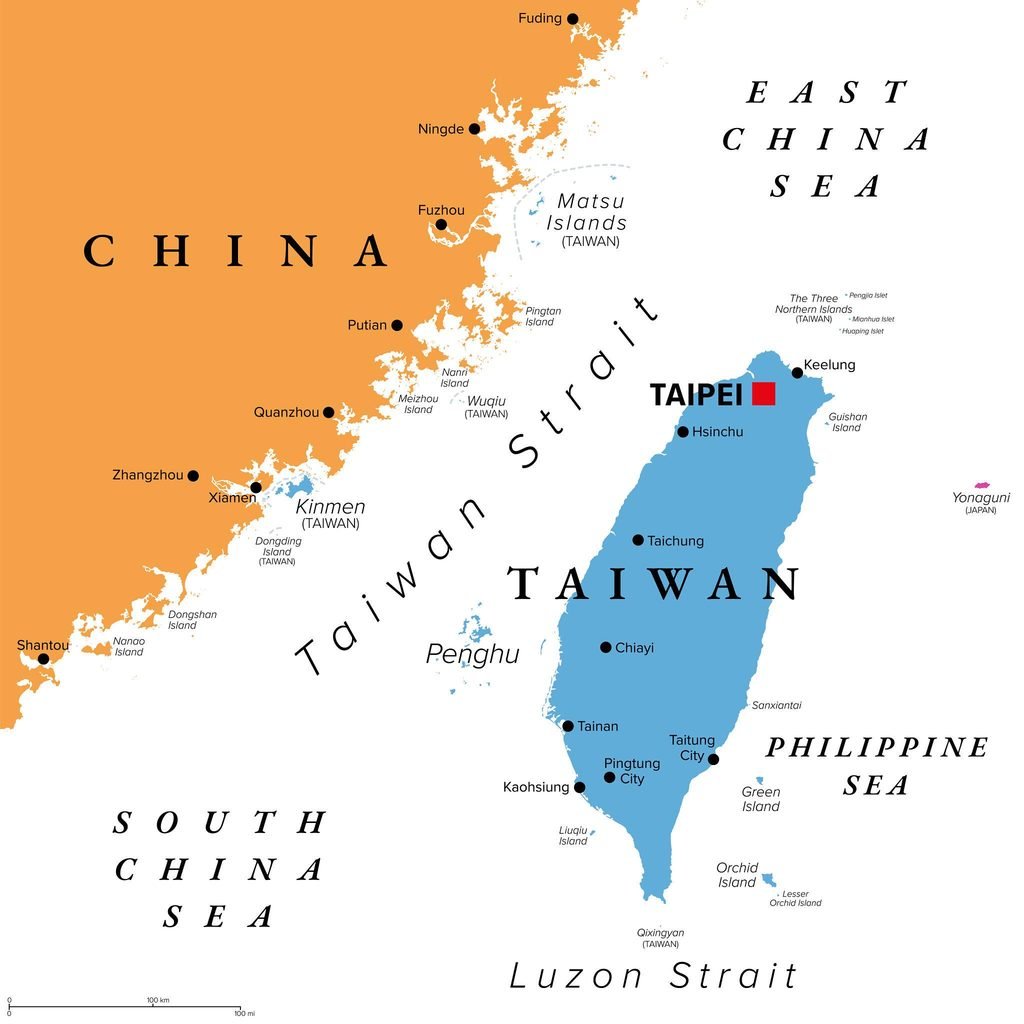
Taiwan remains perhaps the most sensitive issue in the US-China relationship.
China claims Taiwan as part of its territory.
Taiwan operates with its own democratic government and military.
The United States maintains unofficial relations with Taiwan and has longstanding policies concerning Taiwan’s defense capabilities.
Washington’s policy has historically sought to deter unilateral changes to the status quo while maintaining strategic ambiguity over exactly how the United States would respond to a Chinese attack.
For Beijing, Taiwan is a core sovereignty issue.
For Washington, the Taiwan Strait is a major regional security concern.
This creates one of the most dangerous potential flashpoints between the two powers.
What Happened With Taiwan at the Summit?
Taiwan remained unresolved.
Reports indicated that Xi pressed Trump on Taiwan and opposed Taiwanese independence.
At the same time, the United States continued to face decisions regarding arms sales and security assistance to Taiwan.
Reuters reported that major Taiwan-related questions remained unresolved after the summit.
This is important because Taiwan is not simply another trade dispute.
It involves:
- sovereignty
- military planning
- semiconductor production
- US alliances in Asia
- China’s national strategy
- Japan’s security
- regional shipping
- global markets
A military crisis around Taiwan could therefore have consequences far beyond East Asia.
Why Taiwan Makes the US-China Relationship So Difficult
Imagine two countries competing economically but sharing a single issue that each considers central to national security.
That is effectively the Taiwan problem.
China wants to prevent permanent separation.
The United States wants to discourage forced changes to Taiwan’s status.
Taiwan wants to preserve its own political system and security.
Japan watches the situation closely because of its geographical proximity and alliance with Washington.
Other Asian governments also have interests in maintaining regional stability.
This means that even when Washington and Beijing reach economic agreements, Taiwan can quickly become a source of tension again.
The September 2026 summit did not resolve this fundamental disagreement.
Iran Was Another Major Issue
The summit took place during a period of major conflict involving Iran.
That created another difficult question:
Can China and the United States cooperate over the Iran crisis even while competing elsewhere?
Washington has been seeking to pressure Iran.
China maintains important economic relationships with Tehran.
China has also historically emphasized diplomatic approaches to international conflicts.
The two governments therefore have different positions.
The Trump administration has wanted China to use its influence.
Beijing has emphasized its own interests and its right to maintain economic relationships.
Reports before and after the summit indicated that Iran remained one of the areas where the two governments’ interests diverged.
Why China Matters to Iran
China is economically important to Iran.
Iranian oil exports and economic relationships with China provide Tehran with an important external economic connection.
That means Beijing possesses some potential leverage.
But leverage does not automatically mean control.
China has its own interests.
Beijing wants:
- energy security
- stable oil supplies
- regional stability
- economic access
- diplomatic influence
It does not necessarily want to adopt every US objective toward Tehran.
This is why Washington’s hopes for Chinese pressure on Iran face limits.
The Symbolism of Xi’s Visit
The summit was extraordinary in its ceremony.
The White House prepared an extensive state welcome.
The official schedule included:
- military honors
- national anthems
- a military review
- a flyover
- a state dinner
- cultural events
- White House ceremonies
The White House said the arrival ceremony involved 479 military personnel, representing all branches of the US Armed Forces, with a flyover involving a B-2 and four F-22 Raptors.
Xi’s visit also represented the first Washington visit by the Chinese leader in more than a decade.
That symbolism matters.
State visits are not merely about the individual meeting.
They communicate how one country wants the other to be treated.
The ceremony therefore represented a deliberate effort to show that the relationship, despite its rivalry, still has diplomatic channels.
The White House Pageantry Became Part of the Story
The ceremony itself became a subject of political debate in the United States.
Some critics argued that the visit placed too much emphasis on pageantry and not enough on concrete policy outcomes.
Reuters reported criticism from US Senate Democrats who argued that the summit emphasized ceremony while leaving major issues unresolved.
The Guardian similarly reported criticism that the summit was heavy on symbolism while producing few obvious breakthroughs.
Those are political assessments, rather than objective measurements.
There is another interpretation.
Diplomacy often requires leaders to establish a relationship before they can negotiate difficult issues.
From that perspective, ceremony and personal engagement can be part of the diplomatic process.
Xi’s own remarks emphasized maintaining communication and building a framework of strategic stability.
Was the Summit Actually a Failure?
The answer depends on the benchmark.
If the benchmark was:
“Did Trump and Xi solve the major US-China disputes?”
Then the answer is clearly no.
The summit did not resolve:
- Taiwan
- AI competition
- rare-earth supply
- technology restrictions
- the broader trade relationship
- China’s relationship with Iran
If the benchmark was:
“Did the two leaders prevent an immediate deterioration?”
Then the outcome looks different.
They:
- met directly
- continued diplomatic engagement
- extended the trade truce
- kept negotiations alive
- publicly emphasized stability
Therefore, describing the summit simply as a “failure” would miss the distinction between crisis management and conflict resolution.
Several analysts characterized the meeting as falling short of a major breakthrough, while also recognizing the value of maintaining stability. Reuters reported that the trade truce extension bought both sides additional time.
The Difference Between a Breakthrough and a Stabilization Summit
A diplomatic summit can accomplish different things.
Type 1: Breakthrough summit
Leaders solve major disputes.
Type 2: Agreement summit
Leaders sign important treaties or deals.
Type 3: Stabilization summit
Leaders prevent an existing crisis from becoming worse.
Type 4: Communication summit
Leaders maintain dialogue even when major disagreements remain.
The Trump-Xi meeting appears closer to the third and fourth categories than the first.
That does not make it irrelevant.
In a relationship between two nuclear-armed great powers, preventing uncontrolled escalation can itself be strategically important.
Why the Summit Could Not Solve Everything in One Day
The US-China relationship has too many interconnected disputes.
Consider the chain:
Trade → Technology → Semiconductors → AI → Military power → Taiwan → Regional security
These subjects cannot easily be separated.
Suppose Washington restricts advanced chips.
Beijing could view that as an attempt to slow Chinese AI development.
China could respond with export controls.
That could affect American companies.
The US could impose additional restrictions.
The cycle could continue.
Similarly:
Taiwan → US arms sales → Chinese military pressure → Japanese security concerns → US alliances → Chinese regional strategy
Again, these issues are interconnected.
A single summit cannot realistically resolve them all.
What Trump Wanted From the Summit
Trump’s objectives can be understood primarily through several broad areas.
Economic stability
Avoid another trade shock.
Market access
Increase Chinese purchases of American products.
Critical minerals
Improve access to rare earths and other strategic materials.
Technology
Protect US technological advantages.
AI
Maintain US leadership while managing risks.
Security
Prevent a major US-China confrontation.
Taiwan
Avoid destabilization while preserving US interests.
Iran
Seek Chinese cooperation where possible.
These objectives are not always compatible.
For example, a trade deal may require concessions that Washington’s national-security officials oppose.
Likewise, technology restrictions can conflict with efforts to expand commercial ties.
What Xi Jinping Wanted
China had its own objectives.
Xi’s government sought:
Trade stability
China benefits from avoiding another tariff escalation.
Technology access
Beijing wants continued access to international technology markets.
Critical minerals leverage
China wants to preserve strategic advantages in mineral processing.
Taiwan
Beijing wants Washington to avoid supporting Taiwanese independence.
Strategic stability
China wants to avoid an uncontrolled military confrontation with the United States.
Recognition of China’s global role
Beijing wants Washington to treat China as a major power whose interests must be considered.
Xi’s public remarks emphasized a framework where cooperation and competition coexist and disagreements are managed.
The “Thucydides Trap”
One of the most interesting aspects of Xi’s remarks was his reference to the Thucydides Trap.
The term describes the risk that competition between a rising power and an established power can produce conflict.
It is named after the ancient Greek historian Thucydides, who wrote about the Peloponnesian War and the rise of Athens in relation to Sparta.
Xi used the concept to argue that major powers can avoid such a conflict.
The significance is obvious.
China is the rising strategic competitor.
The United States remains the established global power.
Both possess nuclear weapons.
Both have major military capabilities.
Both influence global institutions.
Both compete for technological leadership.
The US-China relationship therefore represents one of the most consequential strategic competitions in modern international politics.
AI Could Become the New Strategic Battlefield
During the Cold War, strategic competition centered heavily on:
- nuclear weapons
- missiles
- satellites
- military technology
Today, artificial intelligence is becoming another major strategic domain.
AI could influence:
- autonomous weapons
- intelligence gathering
- cyber operations
- battlefield logistics
- military simulations
- surveillance
- economic productivity
- scientific research
This means the US-China AI competition may have consequences far beyond Silicon Valley or Chinese technology companies.
The country that develops superior AI capabilities could potentially gain advantages across multiple sectors.
That is why both governments treat AI as a national-security issue.
Why AI Cooperation Is Difficult
There is a contradiction at the center of AI diplomacy.
Both sides want:
AI safety
But both sides also want:
AI superiority
These goals can conflict.
If the United States shares too much technical information, it could strengthen China’s capabilities.
If China shares too much, it could expose strategic vulnerabilities.
Yet neither side wants an uncontrolled AI incident to trigger a military confrontation.
That creates a potential middle ground:
communication without deep technological integration.
Some reporting before the summit suggested discussions around mechanisms for AI-related communication and incident notification.
Such mechanisms could become important if AI systems become directly involved in military or national-security decisions.
The Semiconductor War
Semiconductors are at the heart of the US-China technology competition.
Advanced chips are essential for:
- AI
- supercomputing
- advanced weapons
- telecommunications
- autonomous vehicles
- data centers
The United States has used export restrictions to limit China’s access to some advanced semiconductor technologies.
China has responded by investing heavily in domestic semiconductor capacity.
This is effectively an industrial race.
Washington wants to maintain a technological advantage.
Beijing wants technological self-reliance.
Neither side appears ready to abandon that objective.
Therefore, even if the trade relationship improves, the technology conflict can continue.
The Rare-Earth Advantage
China’s role in rare-earth processing gives Beijing another strategic tool.
The issue is not simply whether rare-earth elements exist underground.
The bigger issue is:
Who controls extraction, refining, processing and manufacturing?
Supply chains can take years to diversify.
The United States and its allies are therefore trying to develop alternative sources.
But building new processing capacity is expensive and slow.
That gives China continued leverage.
The September summit did not eliminate that structural imbalance.
Reuters identified rare-earth supplies as one of the major unresolved economic questions after the summit.
Why American Businesses Were Watching Closely
US companies have major interests in China.
Some depend on:
- Chinese factories
- Chinese consumers
- Chinese suppliers
- Chinese raw materials
- Chinese logistics
A stable relationship can reduce uncertainty.
A renewed trade war can increase:
- costs
- tariffs
- delays
- investment risk
- supply-chain problems
Therefore, American businesses had a direct interest in the outcome.
At the same time, many companies have been diversifying production because of geopolitical risks.
The result is not necessarily complete decoupling.
Instead, many businesses are pursuing:
“China plus one”
or broader diversification strategies.
Why China Also Wants Stability
China has strong reasons to avoid a prolonged economic confrontation with the United States.
China’s economy depends heavily on:
- exports
- manufacturing
- global supply chains
- foreign investment
- access to technology
- international markets
A major US-China trade war could create significant uncertainty.
Beijing therefore has an incentive to maintain a functioning relationship with Washington.
But that does not mean China will accept every American demand.
The Chinese approach has increasingly emphasized strategic autonomy.
Strategic Stability Does Not Mean Friendship
This is one of the most important concepts for understanding the summit.
The United States and China do not need to become friends to reduce the risk of war.
They can remain competitors while establishing rules that reduce miscalculation.
That could involve:
- military communication
- diplomatic hotlines
- AI incident communication
- regular leader-level meetings
- trade negotiations
- crisis-management mechanisms
This is sometimes called competitive coexistence.
The goal is not necessarily to eliminate rivalry.
The goal is to prevent rivalry from becoming war.
The Military Dimension
The United States and China are both major military powers.
Their forces increasingly operate in the same strategic environment.
The US has extensive alliances and military partnerships in the Indo-Pacific.
China has been rapidly modernizing its armed forces.
Key areas of competition include:
- naval power
- missiles
- air power
- space
- cyber capabilities
- drones
- AI
- electronic warfare
- satellite systems
Taiwan sits at the center of many of these calculations.
A military crisis would therefore carry enormous risks.
The South China Sea
The South China Sea is another area where American and Chinese interests overlap.
China has extensive territorial claims.
Several Southeast Asian countries have competing claims.
The United States conducts military operations and maintains security partnerships in the region.
The area is also one of the world’s most important maritime trade zones.
A serious confrontation could disrupt international commerce.
The Trump-Xi summit did not resolve these maritime disputes.
But continued leader-level communication can potentially reduce the risk of an accidental escalation.
Japan and South Korea Are Watching
The US-China relationship affects America’s allies.
Japan is particularly concerned about:
- Taiwan
- Chinese military activity
- maritime security
- regional trade
South Korea has its own concerns involving:
- North Korea
- China
- US security commitments
- regional stability
Both countries therefore pay close attention to US-China negotiations.
If Washington appears to make major concessions to Beijing, allies may worry about American reliability.
If Washington becomes excessively confrontational, allies may worry about being pulled into a wider conflict.
This makes US-China diplomacy important far beyond Washington and Beijing.
Taiwan’s Semiconductor Industry
Taiwan is also economically important because of its semiconductor industry.
Taiwan-based companies are critical to global chip production.
That makes the Taiwan Strait strategically important to the global economy.
A serious military crisis could affect:
- smartphones
- computers
- automobiles
- AI servers
- industrial equipment
- defense systems
The economic consequences could spread globally.
This is another reason why the Taiwan question is not simply a territorial dispute.
What the Summit Achieved
It is important to list the positive outcomes as well.
1. Direct leader-level communication
Trump and Xi met face-to-face.
2. Trade truce extension
The existing trade pause was extended until January 10, 2027.
3. Continued negotiations
Both governments retained diplomatic channels.
4. Strategic stability
Both sides continued to publicly emphasize managing competition.
5. No new major tariff escalation immediately after the meeting
This reduced short-term uncertainty.
These are real outcomes.
They should not be ignored simply because larger disputes remain.
Reuters reported the trade extension as a central concrete result of the summit.
What the Summit Did Not Achieve
The unresolved list is equally important.
No comprehensive trade settlement
The truce was extended rather than permanently replaced.
No final agreement on rare earths
Critical mineral questions remained.
No major AI agreement
Competition continues.
No final Taiwan settlement
The fundamental disagreement remains.
No clear US-China agreement over Iran
The countries maintain different positions.
No end to technology restrictions
The technology competition continues.
This explains why several analysts described the summit as limited in concrete results.
Why “Fell Short” Became the Dominant Description
The phrase is based largely on the difference between expectations and deliverables.
The summit received extraordinary ceremonial treatment.
Xi received a state visit.
The White House staged an elaborate welcome.
The leaders held extensive discussions.
The meeting attracted enormous international attention.
Against that backdrop, observers naturally looked for major agreements.
Instead, the most concrete economic outcome was an extension of an existing truce.
That is why some analysts characterized the summit as heavy on symbolism but limited in substance. Reuters and The Guardian both reported that major disagreements remained unresolved.
But again, “fell short” should be understood as an assessment against expectations, not as proof that the summit achieved nothing.
Trump’s Assessment
Trump publicly described the meeting positively.
He characterized his relationship with Xi as strong and described the meeting as successful from his perspective.
That differs from the more skeptical assessments from some outside analysts.
The difference illustrates how diplomatic success can be measured differently.
For a leader, success may mean:
- avoiding escalation
- securing time
- maintaining personal relations
- obtaining a temporary agreement
For an analyst, success might mean:
- solving structural disputes
- securing binding commitments
- reducing long-term risk
These are not identical standards.
China’s Assessment
China’s official messaging was also positive.
Xi emphasized cooperation, strategic stability and continued dialogue.
Chinese state reporting highlighted what it described as new consensus and the importance of improving bilateral relations.
That does not mean China and the United States suddenly agree.
Rather, Beijing wants the relationship managed within a framework that prevents competition from becoming uncontrolled confrontation.
The State Dinner
The White House state dinner provided another highly visible moment.
Trump and Xi attended the dinner with their spouses and guests.
The event was part of the formal state visit.
The Chinese Foreign Ministry also published Xi’s toast, in which he emphasized the importance of US-China relations and cooperation.
The dinner itself was not a policy agreement.
But such events serve a diplomatic purpose.
They create opportunities for informal conversation.
They signal respect.
They can help leaders maintain a personal relationship even when their governments disagree.
The Importance of Personal Diplomacy
Trump and Xi have developed a direct personal relationship.
That can help diplomacy.
Leaders who communicate directly may be able to resolve misunderstandings more quickly.
But personal diplomacy also has limitations.
A strong relationship between two leaders does not automatically solve:
- institutional disagreements
- military planning
- economic competition
- domestic political pressure
- Taiwan
- technology restrictions
Ultimately, foreign policy is made by entire governments.
Therefore, leader-level chemistry can facilitate diplomacy, but it cannot replace institutional agreements.
Domestic Politics in the United States
The summit also had a domestic political dimension.
American politicians disagree about how Washington should approach China.
Some favor:
- stronger tariffs
- tougher technology restrictions
- stronger support for Taiwan
- tighter investment controls
Others emphasize:
- economic stability
- negotiation
- avoiding military escalation
- maintaining trade
The summit therefore became part of the domestic debate over America’s China policy.
Reuters reported criticism from Democratic senators who argued that the summit did not deliver enough on technology, Taiwan and critical minerals.
Other voices have emphasized the importance of maintaining communication.
China’s Domestic Perspective
The Chinese government also has to balance several objectives.
Beijing wants to demonstrate strength.
But it also wants economic stability.
It wants technological independence.
But it also benefits from international trade.
It wants to protect its position on Taiwan.
But it wants to avoid an unnecessary war.
This creates a similar strategic balancing act.
Xi therefore has incentives to project confidence while keeping diplomatic channels open.
The Global Economic Impact
Even a temporary US-China trade agreement can have global consequences.
The two countries are among the world’s largest economies.
A renewed tariff war could affect:
- commodity prices
- shipping
- manufacturing
- inflation
- investment
- currency markets
- technology supply chains
A stable trade relationship can reduce some of these risks.
However, uncertainty remains because the current arrangement only extends the truce rather than permanently resolving the underlying disputes.
Trump Xi Summit 2026: What Happens Next?
This is one of the most important questions coming out of the summit.
The trade truce now has a new deadline.
That means the next several months become another negotiation period.
The two governments will have to discuss:
- tariffs
- agricultural purchases
- rare earths
- technology
- market access
- industrial policy
If negotiations produce a broader agreement, the relationship could stabilize further.
If talks break down, tariff tensions could return.
The January deadline therefore becomes an important marker for the future of the relationship.
Could Another Trade War Begin?
Yes, it remains possible.
The truce extension does not permanently eliminate disagreement.
A new dispute could emerge over:
- Chinese exports
- American technology controls
- rare-earth restrictions
- agricultural purchases
- industrial subsidies
- semiconductor policy
The difference is that both sides now have more time to negotiate.
That is one of the practical benefits of the extension.
Could the US and China Go to War?
A direct US-China war would be extraordinarily consequential.
Both countries possess nuclear weapons.
Both have major conventional military capabilities.
Both have global economic influence.
A war could affect:
- Taiwan
- Japan
- South Korea
- Southeast Asia
- global shipping
- financial markets
- semiconductor supply
- energy prices
- international trade
That is precisely why diplomatic mechanisms matter.
The objective is not necessarily to eliminate competition.
It is to keep competition below the threshold of war.
Taiwan Remains the Biggest Military Risk
Among all US-China disputes, Taiwan is particularly dangerous because it could rapidly become military.
A trade disagreement can be negotiated.
A semiconductor dispute can be managed.
A tariff can be changed.
A military incident is different.
If US and Chinese forces were involved in a confrontation around Taiwan, escalation could become difficult to control.
That is why communication between Washington and Beijing is strategically important even when there is no agreement on Taiwan itself.
The AI Race Could Increase Military Risk
AI introduces another unusual problem.
Future military systems may make decisions faster than humans.
That could reduce reaction time during crises.
Imagine:
- a cyberattack detected by an AI system
- an automated response
- a misinterpretation of that response
- another automated reaction
The situation could escalate rapidly.
This is why AI communication mechanisms may eventually become as important as military hotlines.
The emerging US-China discussion around AI safety therefore has significance beyond technology companies.
The New Shape of US-China Rivalry
The old Cold War model does not perfectly describe today’s US-China relationship.
The United States and Soviet Union had limited economic integration.
The US and China are deeply economically connected.
China is also a major manufacturing center.
The relationship is therefore better described as:
strategic competition combined with economic interdependence.
That makes it more complicated.
Washington cannot simply treat China as an isolated adversary.
Beijing cannot easily isolate itself from the global economy.
Both need the other while competing with the other.
The “Decoupling” Debate
For years, policymakers discussed economic decoupling.
Complete decoupling would mean separating the two economies much more extensively.
That would be extremely difficult.
Instead, the more realistic approach has increasingly become:
de-risking.
This means reducing dependence in strategically sensitive sectors while continuing ordinary trade where possible.
Examples include:
- semiconductors
- critical minerals
- telecommunications
- defense technology
- AI infrastructure
This approach allows trade to continue while governments attempt to reduce national-security vulnerabilities.
Why the Summit Matters for India
The US-China relationship also matters to India.
India has its own complicated relationship with both powers.
India and China have unresolved border issues.
India and the United States have strengthened strategic cooperation.
India is also deeply integrated into global supply chains.
A prolonged US-China trade conflict could create both risks and opportunities for India.
Potential opportunities include:
- manufacturing investment
- electronics production
- supply-chain diversification
- semiconductor investment
- exports
Potential risks include:
- global economic uncertainty
- higher input costs
- geopolitical polarization
Therefore, Indian businesses and policymakers will closely watch what happens after the summit.
Why Europe Is Watching
Europe also has significant economic relationships with China.
European countries want:
- access to Chinese markets
- stable trade
- technological competitiveness
At the same time, Europe is concerned about:
- economic dependence
- critical supply chains
- Chinese industrial competition
- global security
A prolonged US-China confrontation could force European governments to make difficult strategic choices.
The outcome of US-China negotiations therefore affects more than the two countries themselves.
What the Summit Means for Global Order
The United States and China are competing over more than trade.
They are also competing over:
- technological standards
- international institutions
- economic influence
- military power
- diplomatic partnerships
- infrastructure
- developing-country relationships
China has expanded its global economic and diplomatic presence.
The United States remains the world’s most powerful military and financial power.
Their competition is therefore partly about the future structure of the international system.
The summit did not settle that competition.
Cooperation and Competition Can Exist Together
One of the most important lessons from the meeting is that countries can cooperate in one area while competing in another.
The US and China can:
- negotiate trade
while simultaneously:
- competing in AI.
They can:
- maintain diplomatic communication
while disagreeing over Taiwan.
They can:
- discuss international stability
while supporting different positions regarding Iran.
This is not unusual in international politics.
It is increasingly the normal structure of US-China relations.
The Summit’s Scorecard
Instead of simply asking whether the summit “succeeded” or “failed,” it is more useful to examine each issue separately.
| Issue | Result after September 24, 2026 |
|---|---|
| Trade truce | Extended to January 10, 2027 |
| Tariffs | Major issues remain unresolved |
| Rare earths | No comprehensive settlement reported |
| AI | Dialogue continued, strategic competition remains |
| Taiwan | Fundamental disagreement remains |
| Iran | Different strategic positions remain |
| Technology restrictions | No comprehensive resolution |
| Diplomatic communication | Continued |
| Personal Trump-Xi relationship | Publicly emphasized |
| Long-term strategic rivalry | Continues |
The table illustrates why the summit generated mixed reactions.
There were concrete outcomes.
But there was no comprehensive agreement covering the central strategic disputes.
Reuters’ post-summit assessment similarly emphasized the limited nature of the trade extension and the unresolved questions surrounding technology, rare earths and other issues.
What Could Change Before the Next Summit?
Several developments could reshape the relationship.
1. Trade negotiations
The biggest immediate factor.
2. Taiwan
Any military or political development could change the relationship quickly.
3. AI
New restrictions or technological breakthroughs could increase competition.
4. Rare earths
Export controls could trigger new disputes.
5. Iran
Developments in the Middle East could put Washington and Beijing on opposite sides.
6. US domestic politics
Congress can influence China policy, particularly regarding Taiwan and technology.
7. Chinese economic conditions
Beijing’s economic needs will influence its willingness to negotiate.
What Businesses Should Watch
For businesses, the most important indicators are not ceremonial events.
They are policy changes.
Watch:
- tariff announcements
- export controls
- semiconductor rules
- rare-earth restrictions
- agricultural purchase data
- shipping costs
- investment restrictions
- sanctions
These factors will determine whether the trade truce develops into a durable economic arrangement.
What Investors Should Watch
Investors should pay attention to sectors particularly exposed to US-China relations.
These include:
- semiconductors
- electric vehicles
- AI
- consumer electronics
- rare earths
- shipping
- industrial machinery
- agriculture
A deterioration could create volatility.
A broader agreement could reduce uncertainty.
But the political and economic relationship remains too complex to predict from one summit alone.
What the Summit Says About Trump’s China Strategy
Trump’s approach combines confrontation and personal diplomacy.
He has used:
- tariffs
- technology pressure
- economic negotiations
while also maintaining direct communication with Xi.
This produces an unusual diplomatic style.
The relationship can appear friendly at the leadership level while remaining highly competitive at the policy level.
The September summit illustrated this contradiction clearly.
The ceremony was warm.
The underlying disputes were not.
What the Summit Says About Xi’s Strategy
Xi’s approach emphasizes long-term strategic stability.
China does not want a major confrontation with the United States if it can avoid one.
At the same time, Beijing does not appear prepared to surrender its core positions on:
- Taiwan
- technological development
- economic sovereignty
- strategic independence
Xi’s message therefore emphasizes coexistence without accepting American dominance.
His White House remarks called for cooperation to be the mainstay while keeping competition within limits and managing disagreements.
The Most Important Takeaway
The Trump-Xi Summit 2026 did not produce a new US-China partnership.
It also did not produce a dramatic collapse in relations.
Instead, it produced something more limited:
a temporary framework for keeping competition under control.
The trade truce was extended.
The leaders continued talking.
Major disagreements remained.
That may sound underwhelming.
But in a relationship between two major military and economic powers, avoiding escalation can itself be significant.
The challenge is whether the temporary stability can eventually become something more durable.
What Comes Next?
The next phase will be more important than the ceremony.
The key question is whether Washington and Beijing can turn the temporary trade extension into a broader agreement.
That will require negotiations over:
- tariffs
- rare earths
- agricultural purchases
- technology
- AI
- investment
At the same time, Taiwan and Iran remain potential sources of geopolitical tension.
Therefore, the summit should be viewed as one stage in an ongoing negotiation, rather than the conclusion of the US-China rivalry.
Final Conclusion
The Trump-Xi Summit 2026 was one of the most important diplomatic events of September.
Xi Jinping’s visit to Washington was historic because it represented his first trip to the US capital in more than a decade.
The White House treated the visit as a major state occasion, with military honors, a ceremonial welcome and a state dinner.
But behind the ceremony was a much more difficult reality.
The United States and China remain strategic competitors.
The two countries disagree over:
- trade
- tariffs
- technology
- artificial intelligence
- rare earths
- Taiwan
- Iran
- military power
- the future international order
The summit did produce one major practical result: the existing trade truce was extended until January 10, 2027. That extension reduces the immediate risk of another tariff escalation and gives negotiators more time.
But it is not a permanent settlement.
Major disagreements remain.
That is why some analysts and media outlets concluded that the meeting fell short of the major breakthrough that its extraordinary ceremony might have suggested. Reuters reported that the extension essentially pushed major economic questions into the next round of talks, while The Guardian described the summit as heavy on symbolism with no clear breakthrough on AI, trade, Taiwan or Iran. The US-China rivalry is also occurring alongside other major global conflicts, including the China-Taiwan Conflict
At the same time, calling the summit simply a failure would be too simplistic.
The two leaders met.
They kept communication open.
They avoided an immediate trade escalation.
They agreed to continue managing their competition.
And both governments publicly emphasized the importance of strategic stability.
China’s official account of the meeting emphasized cooperation, managed competition and the need to prevent the relationship from becoming destabilized.
The real test will therefore come after the cameras leave Washington.
If the January 2027 trade deadline produces a broader agreement, the September summit could eventually be remembered as the beginning of a more stable period.
If negotiations collapse and tariffs, technology restrictions or geopolitical tensions return, the meeting may instead be remembered as a temporary pause in a much larger strategic competition.
For now, the evidence points to neither a historic breakthrough nor a diplomatic breakdown.
It points to managed rivalry.
And that may be the most important story of the Trump-Xi Summit 2026.

Mohit Tejwani is a geopolitics writer and researcher focused on global conflicts, international relations, and military strategy. He analyzes ongoing global tensions and provides simplified insights into complex world events.